January 8th, 2011
Something that is child's play on a cellphone, i.e. taking photos and sending them immediately via the cellphone network, is now also possible with professional DSLR cameras from Canon. With Live Image Transmission (LIT), high-resolution photos can be sent directly from the camera to the editorial team at the press of a button. Swisscom's HSDPA+ data technology provides the speed required. A 3 MB JPEG file arrives on the editorial team’s server in a best-case scenario just 20-40 seconds after release. The 3G successor LTE (Long Term Evolution) will provide upload rates almost as fast as cable, and this technology is also coming to Switzerland this year. The images are transferred via the Canon Wireless File Transmitter (WFT) and a small, mobile 3G WiFi router. This means it can work anywhere where there is a 3G/HSDPA signal. The system can also be configured for public WLAN hotspots and network cables. Live Image Transmission is pre-destined, however, for ultra-mobile use in cities, suburbs, close to main traffic arteries and of course in most rural areas (often only UMTS). In Switzerland, Swisscom’s 3G coverage extends to 92 percent of the country's populated areas. Thanks to a good network supply, LIT image transfer is also good or very good in most sports stadiums and even in skiing areas (Lauberhorn!). In recent years, Andy Mettler has used Live Image Transmission on moving trains, cable cars, helicopters, steamers, motorboats, automobiles, motorbikes and trams across the length and breadth of Switzerland. His summary: “Photographing an event in the middle of Lake Lucerne, looking out over the city of Lucerne, and sending the images immediately to the Internet is a fascinating experience. Of course, there are also some less positive exceptions: LIT doesn’t work in Puschlav. Swisscom only offers EDGE technology here. That's a real test of patience and nerve.
World innovation for 2009: Live Image Ticker shows live photos in the web
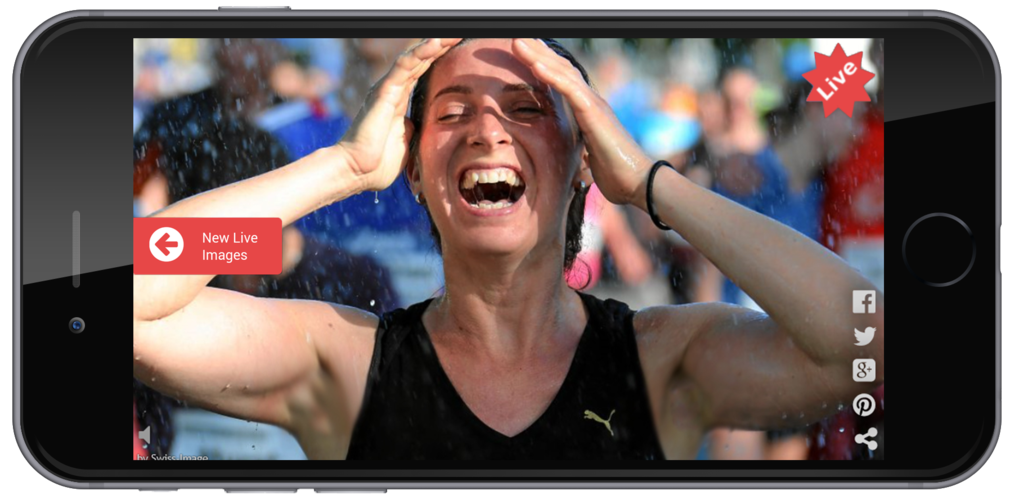
For over 10 years, Swiss-Image has been at the forefront of the development of new workflows for mobile image transfer. The Swiss image agency for tourism and events unveiled a world innovation in the fall of 2009: the Live Image Ticker. The ticker follows on from the initial attempts at live slide shows in 2002. The Live Image Ticker uses live photos from the camera and displays them just seconds after they were taken on the Internet using a Flash-animated slide show. Swiss-image.ch uses state-of-the-art image technologies for its exclusive and comprehensive image service at events. LIT provides the media with press photographs of events quicker than any other agency. The time factor isn’t always all that important, but at major events such as the WEF annual summit in Davos, the rapid availability of photos is a huge advantage.
The advantages and possibilities of LIT also benefit event visitors, guests and of course everyone who cannot be there themselves. Web slide shows (Live Image Ticker and sound slide show) as well as emotional image presentations at the event are intended to entertain and stir emotions. Often, for cost reasons, the Live Image Ticker substitutes for a local TV live broadcast in the spectator zone and in the VIP marquee. The Live Image Ticker can also be played automatically and displayed on screens or video walls.
Live Image Transmission is a massive success, not just at the WEF Annual Meeting in Davos
swiss-image.ch has been working for years on simplifying and accelerating the transfer of images from cameras. Photographing, displaying images on the camera display and sending the data instantly via 3D cellular communication to the editorial team. For almost two years, this has been possible with 3G WiFi routers and Canon professional cameras. The Swiss image agency has continuously optimized the Live workflow and implemented supplementary Flash programs for the Internet. At the WEF Annual Summit, at the Swiss Swingfest or at the Jungfrau Marathon - swiss-image.ch's photographers used Live Image Transmission everywhere. Even at the recent Spengler Cup: On December 26th 2010, Davos striker Reto von Arx scored his second goal against Spartak Moscow. Photographer Andy Mettler clicked his Canon EOS-1D Mk IV, looked briefly at the display on the camera and the green light on his attached Wireless File Transmitter had already started to flash. After less than a minute, the picture can be viewed in a Live slideshow on the Internet. Three, four minutes after the picture was taken, the press image is available to online and newspaper editorial teams for downloading – edited and complete with a picture key from the image editor! The new Live workflow makes it all possible.
Download the entire article with more information as a PDF >>


The equipment for quick and comprehensive image reporting from the 2010 Spengler Cup in Davos: Canon EOS-1D Mk IV, WFT-E2 and a mobile 3G WiFi router from Huawei. The live photos of ice hockey matches (including a goal camera) or the Canadian ice hockey legend Mark Messier were displayed on video screens in the media center and in the ice dome with the Live Image Ticker. The media were generally able to access and download the images after two to five minutes at www.swiss-image.ch
am. The glorious sunny weather in Switzerland in the middle of March 2010 made the 42nd Engadin Ski Marathon an unforgettable experience for the over 11,400 cross-country skiers participating in the event. And for the very first time, participants' friends and family and, of course, all "Engadin" fans were able to follow the marathon action live online, thanks to the transmission of live pictures. From the start to the finish line, two photographers from swiss-image.ch, Rémy Steinegger and Andy Mettler, photographed the race along the entire course with their Canon pro cameras. The Swisscom Live Image Transmission system enabled the high-resolution photos to be transferred to a web server using Swisscom 3G data transmission. The images were immediately uploaded to the Live Image Ticker, and the live photos could be seen in the flash animation no more than 40 seconds later. "We have already used the Live Image Ticker at several major events since autumn 2009," says Andy Mettler, "but this time, even we were flabbergasted by the reception this gained. Even while the marathon was still underway, we were receiving calls from internet users enthusing about this new image service."
Live pictures were also available in print quality to the media within five minutes of being shot
A key advantage of the system: At the editorial office in Davos, the images from the Live Image Ticker were immediately optimized, captioned, and put online on www.swiss-image.ch for royalty-free use by the press by photo editor Silke Blumenstein. Photos from the start line in Maloja could therefore be used by the media as soon as the top skiers had crossed the frozen Lake Sils. The pictures were ready for download in 100% professional print quality. Mettler explains, "The main objective of our development work over the last decade has been to provide the media with printable images of an event extremely quickly. The Live Image Ticker is in fact just a spin-off product, but it has completely taken off and just goes to show what can be achieved with our transmission technology." As in the case of all complex systems, problems cannot be ruled out: for example, the photographer in the helicopter had problems connecting to the internet. His photos were therefore uploaded to the Live Image Ticker with a slight time delay.
From the camera directly to the Internet - the future belongs to Live Image Transmission
The Live Image Ticker from swiss-image.ch is the first system of its kind in the world, and the Engadin Ski Marathon was the first cross-country ski marathon to be transmitted live online with photos. Graubünden-based photo agency swiss-image.ch has been developing and using mobile image data transmission technology for the super-fast provision of press photos online since 2002. The digital photos transmitted have a resolution of 5120 pixel (approx. 5MB JPEG) and are therefore also ideal for use in magazines and advertising. The world premiere of the Live Image Ticker was in autumn 2009 when it was used to cover the Lucerne Marathon. The Live Image Ticker was also successfully deployed, together with state-of-the-art communication technology, such as Live Image Transmission and Remote Picture Editing, at the Spengler Cup and the World Economic Forum Annual Meeting 2010 in Davos. At the Engadinsnow Freeski contest in January 2010, the spectacular press photos were transmitted live from a helicopter on Mount Corvatsch over a period of four hours. Remote Picture Editing, developed by Paul Nolan (USA), was used by some photo agencies at the Winter Olympics in Vancouver. The time gain using this technology in comparison to conventional photography was enormous. "This method of working is so efficient that I no longer want to work with conventional tools," says Mettler of the new image transmission technology, "it's just a shame that the major camera manufacturers didn't take my predictions over the last eight years seriously and have therefore not yet developed a wireless file transmitter with Wi-Fi and 3G/HSDPA/HSUPA. Putting pictures online directly from the camera is set to be big business, and not just for the professional camera market."


One high quality picture, two immediate uses: thanks to fast 3G image transmission directly from the camera. Users have an immediate view of the lifelike "photo course" in the Live Image Ticker (pictured at top). With almost no delay, the same photo is then also available to the media for downloading as a royalty-free picture (bottom). (Photos Andy Mettler)
The Internet is becoming more important for events - live photos are an emotional communication medium
am. Will live photos soon be a standard feature of websites that cover major events? Yes, says Andy Mettler, CEO of swiss-image.ch and photographer, following the world premiere of the "Live Image Ticker", a proprietary development for rapidly transmitting photos of events directly from a professional digital camera to the Internet. swiss-image.ch first used the "Live Image Ticker" to cover the 3rd Lucerne Marathon 2009. The lively, flash animated online sequence of images was very well received.
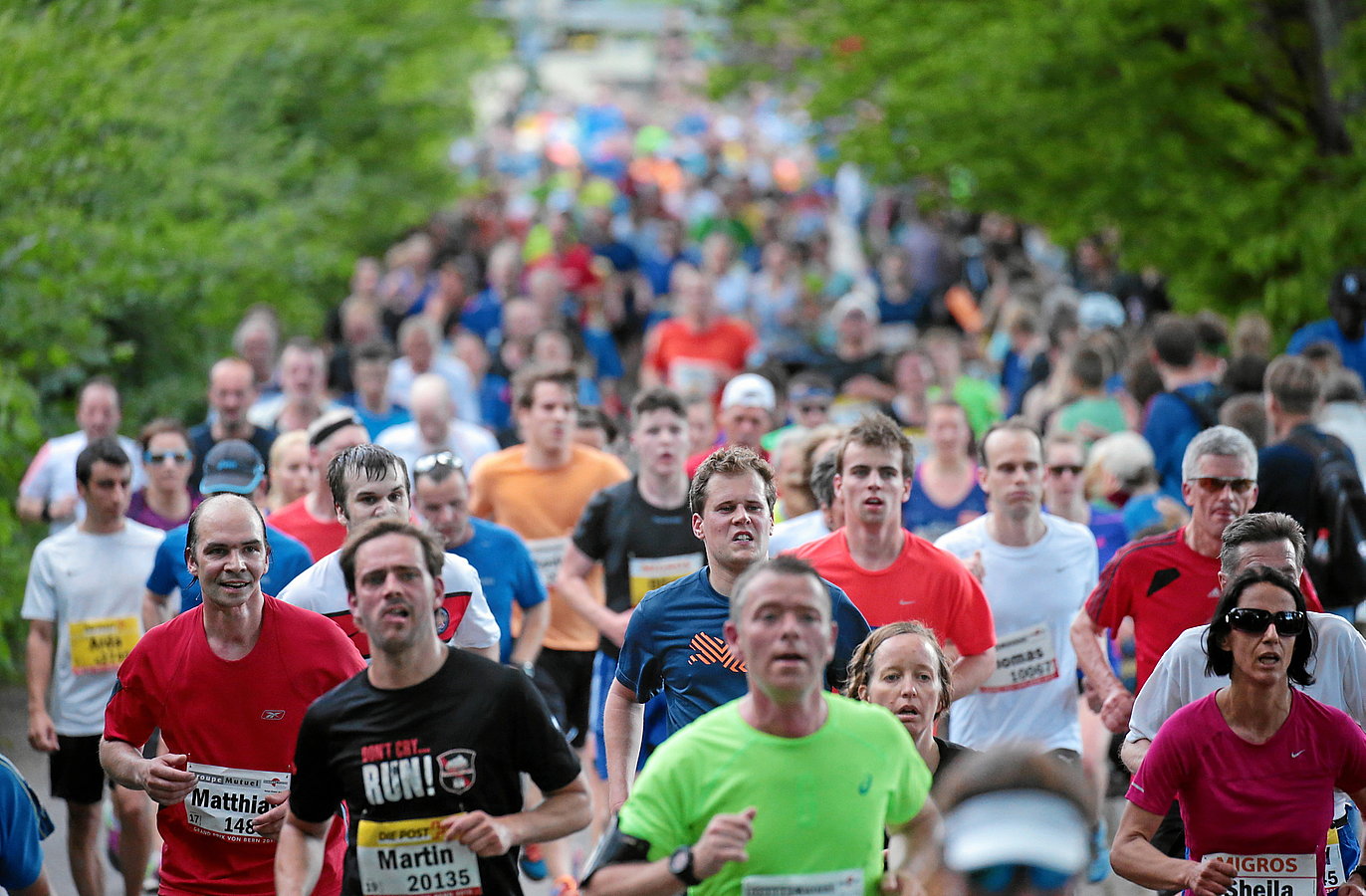
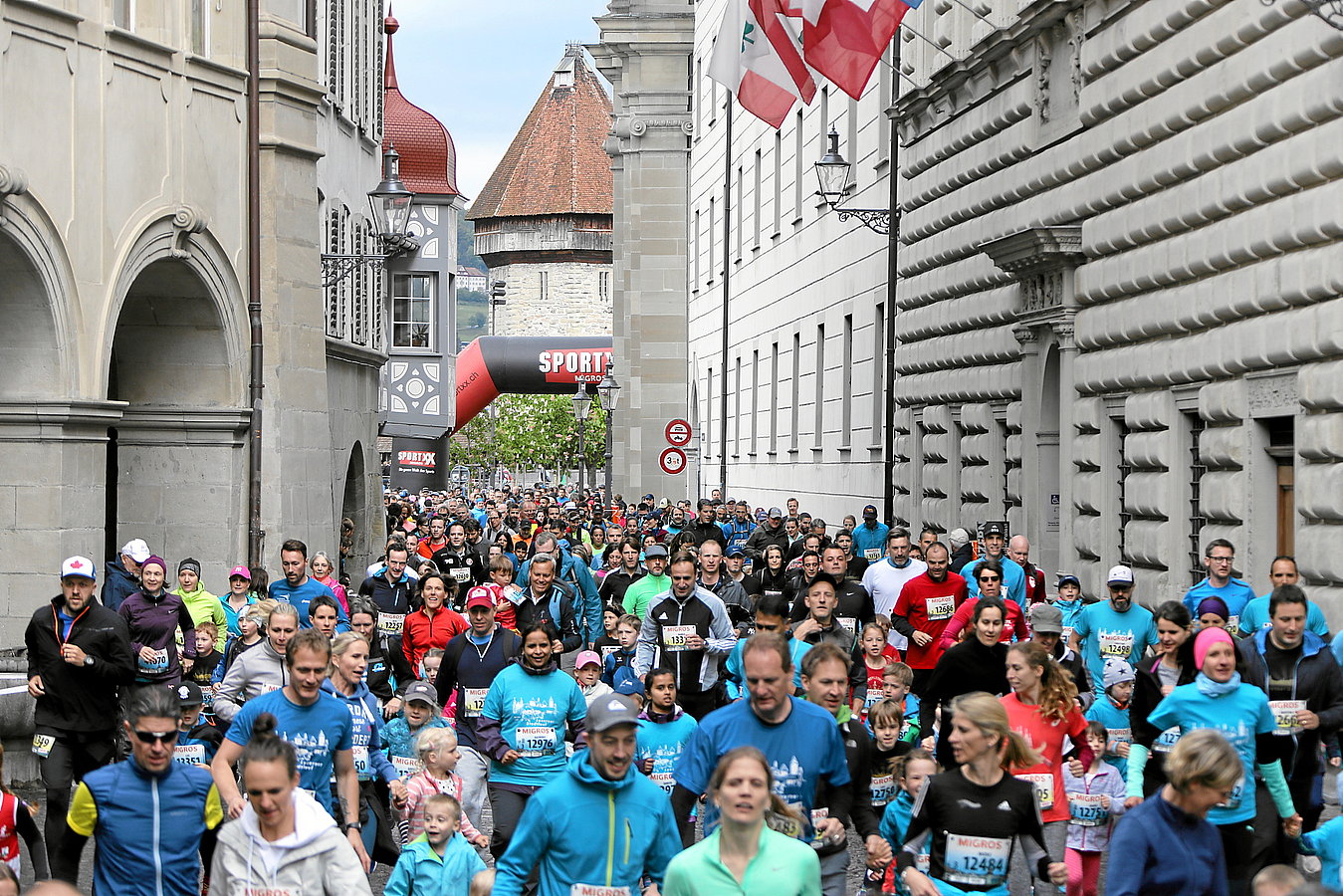
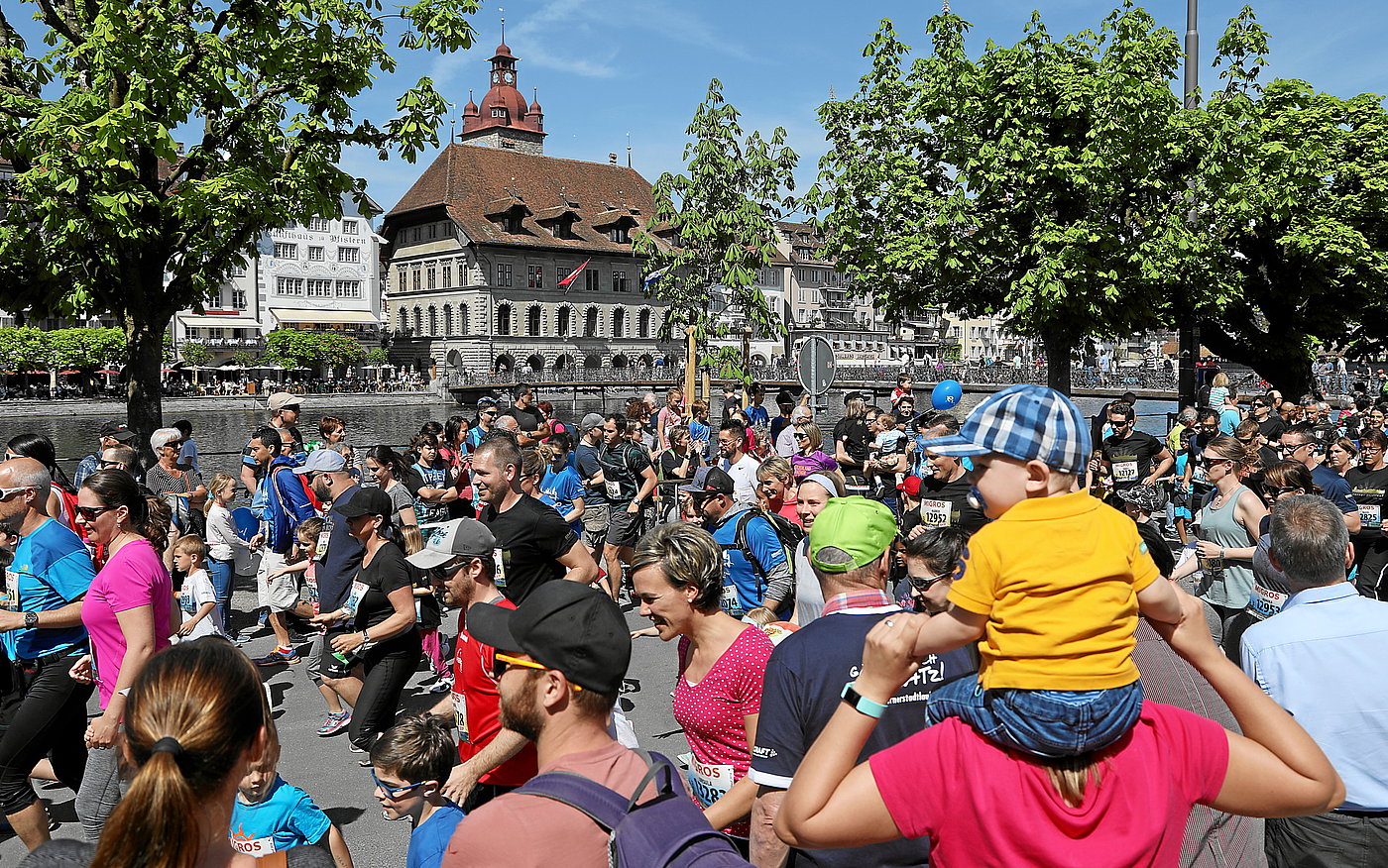
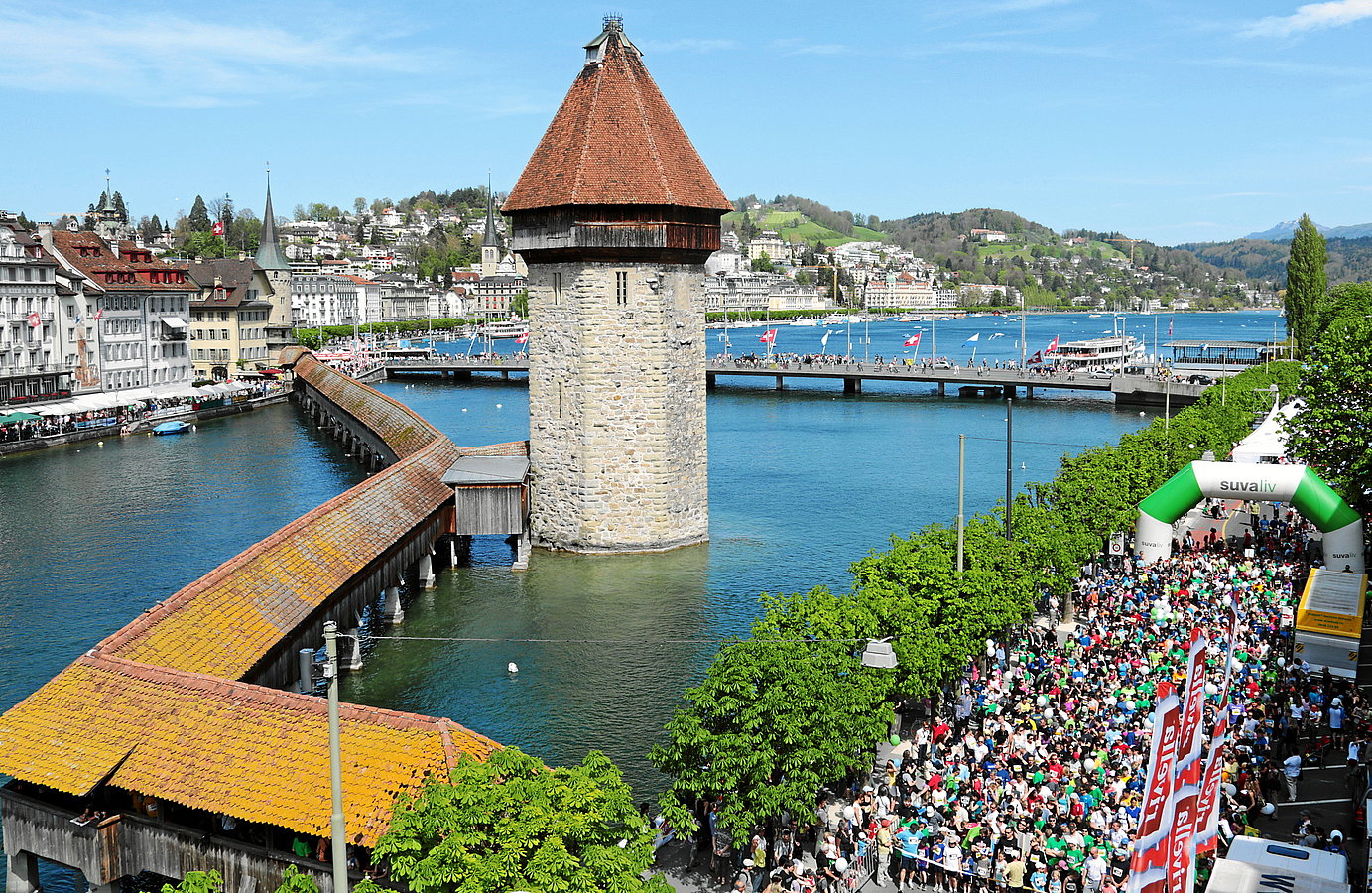
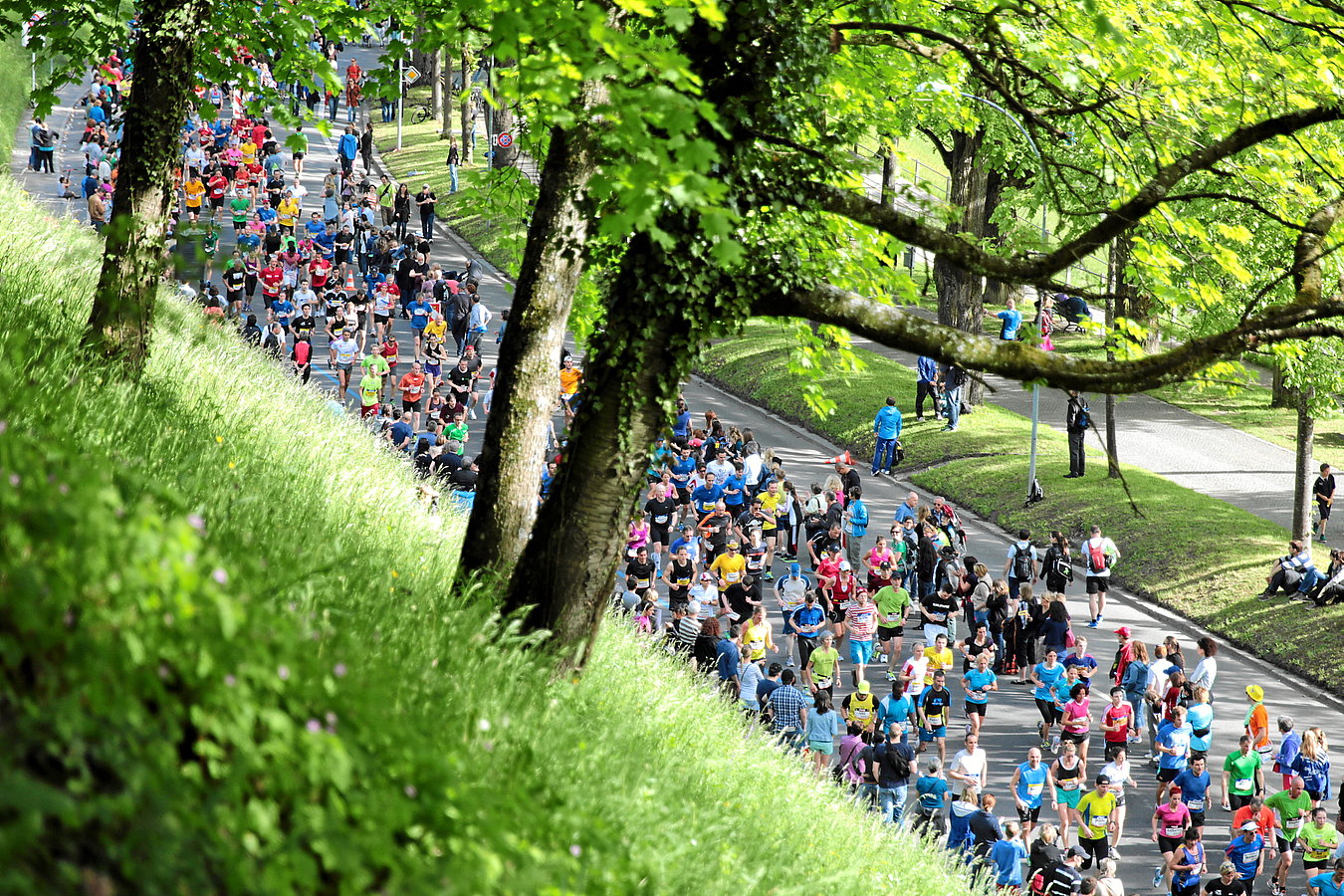
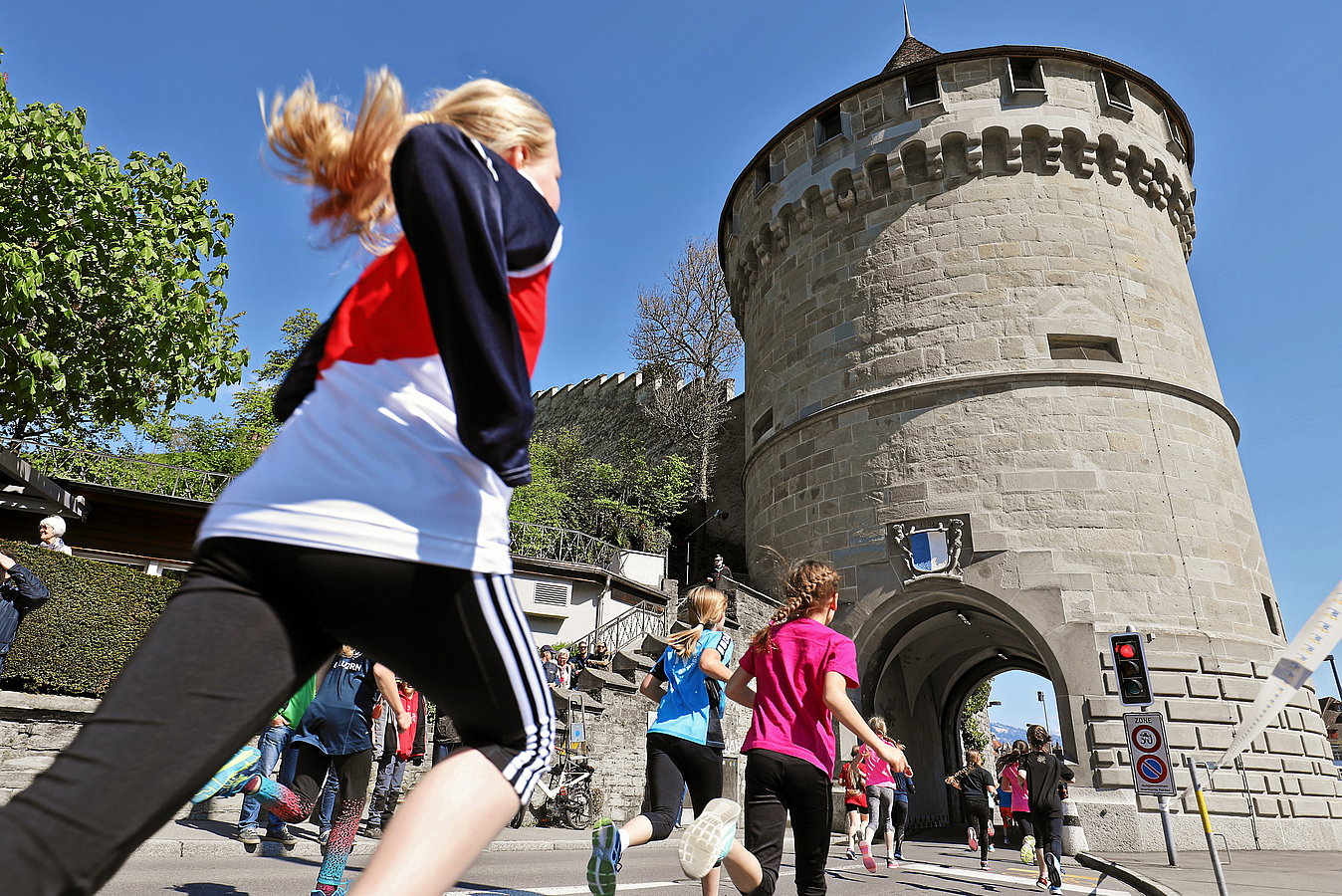
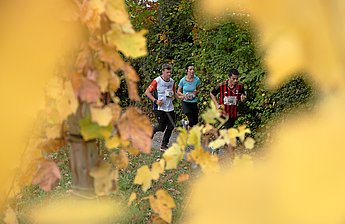
Shortly before the start, Internet visitors were able to log into the live image coverage and see what was happening in the marathon from new pictures displayed about once a minute. Photos of 8,500 runners at the starting line, on the Lucerne pier, at the culture & congress center, or running along the picturesque Lake Lucerne could be seen at the website www.lucernermarathon.ch about one to five minutes after they were taken. The whole thing was accompanied by music. At the Swiss Museum of Transport, where the finish line was placed for the first time, 14,000 onlookers were also able to follow the live images of the course on the big screen. During their live TV coverage, Tele Tell had no live TV images to cover the "landstrecke", so they inserted live images to fill the gap.
With no real warning, around 7,000 visitors tuned into the Live Image Ticker on the marathon Sunday. Ten days later, somewhere around 40,000 visitors had already viewed the ticker or the sound & slide show that was put online afterwards. That's a lot, considering it was the first time the Live Image Ticker had ever been used, and that not many knew about it beforehand. Photography and communication specialist Metter says: live texts and live images of sports events are simply mandatory on an events website these days. Many friends and relatives of the participants want to keep up with how things are going at the event from home. Live streaming and TV images are simply too complicated and too expensive. A picture says more than a thousand words. Our Live Ticker brings impressions and emotions live to your home. Our image ticker and the sound & slide show also appeal to participants and guests at a special level later on. Around 40,000 visitors had registered for these two photo tools after ten days.
All shots were on target with the winner
After the marathon, Andy Mettler declared himself very satisfied with the ultra-mobile image transmission system for Canon cameras. "Apart from a brief interruption in transmission in St. Niklausen, the UMTS data transmission of the large JPEG files and automatic slideshow generation went smoothly beyond all expectations," the official marathon photographer sums up positively. One must keep in mind that the "Live Image Ticker" is a secondary usage. "We transmit the pictures in high quality in order to provide the media with the quickest possible, high quality, but still royalty-free press photo service. The pictures at 5000-plus pixel resolution are intended primarily for the press photo service, and are now also used for valuable web use - which many users at home will certainly appreciate."
When pictures learn to "fly", or how WI-FI and UMTS make the impossible possible
Thanks to WI-FI and UMTS, swiss-imge.ch has already been transmitting photos directly from the camera to the Internet for many years now. Our photographic editor optimizes and captions press photos on the fly. She even has special technology at her fingertips that lets her view and select the pictures directly on the camera before downloading them over the Internet. "Remote Picture Editing gives you not only quicker availability of press photos, but also a whole new workflow for the photographer," explains Mettler. "The division of work between me and a photographic editor not only saves time, but also allows me to spend more time and patience on the coverage. It also keeps costs down for the event organizer."
The Swiss photography agency swiss-image.ch is blazing new trails for press photography with its "on the fly" image transmission. The Live Image Ticker has now eliminated the distinction between press and public photos. "We have to take new paths in visual communication. A photo in the newspaper is not the only important thing. An appealingly presented photo in the Internet is a very good way to make emotional contact. Our pictures - as in the case of the marathon runs - make sure potential 'customers' can be attracted for the next broadcast," explains Andy Mettler.
When will WLAN and 3G come to Canon EOS cameras?
Live TV broadcasts of marathon runs or cycle races have been possible for decades. Relay planes or helicopters forward the video signal to a satellite or to a terrestrial antenna. There are only seconds of delay for the viewer at home. Hardly anyone in press photography has concerned themselves with this issue until recently. Security forces in the USA, Great Britain and recently also in Switzerland have been demanding such transmission technologies more and more of late. Remote Picture Editing and Live Image Transmission have proven highly successful for event coverage in recent years. The Live Image Ticker by developer Roman Abt is an application that now demonstrates the speed and the advantages of live photos outside the editorial office. An important link in the live chain is still missing, though: WLAN and G3 should be incorporated directly into or onto the digital camera. We will be interested to see how much longer it will take for the major Japanese camera makers to develop such models. Perhaps the Live Image Ticker could demonstrate to those responsible at Canon the advantages and interesting possibilities that G3 data transmission technology inside cameras would offer


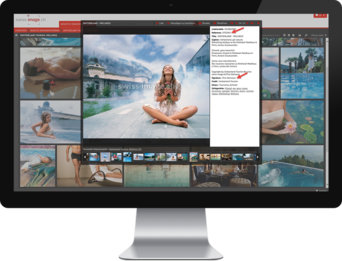
User-friendly, up-to-date and powerful: That's how the new image database from swiss-image.ch presents itself. All database users can expect numerous advantages from Orphea Studio - particularly the accredited media and tourism partners who use the Swiss image database for tourism and events in their day-to-day work. We are very pleased to announce that the new image database -developed in recent months in cooperation with the French company Algoba Systems- will go online within the next few days.
The new image database is among the most advanced image search engines on the market. Its easily navigable, visually-oriented user interface is attractive to both database newbies and image professionals, who can find desired images with ease thanks to advanced search functions. Tones of black and gray dominate the clearly presented layout, directing the focus on the colorful images.
Many search-paths lead to the goal - quickly and easily!
Here is a quicker way to get to your desired images in the tourism and events sections:
1. The visual search is based on so-called "features"- image collections that are quickly accessed and reviewed. In the tourism image archive, the features are mostly arranged according to destination and season, e.g. winter and summer. Larger collections of images - such as those from Swiss Tourism etc. are divided into several features. Features of large image collections only contain a selection of the most important pictures. More images on the same subject may be found using full text search or keyword linking.
In the events section, the available images are usually divided into two features: one containing photos of the current event, the other consisting of archived images.
2. Thanks to a high-performance search engine, pictures may quickly be found using a full text search. In similarity to Google, one or more search terms can be entered in the main search field. Two or more search words will automatically be linked using "AND" (i.e. the search "Davos winter" corresponds to the search "Davos and winter"). Experienced image professionals may use the advanced search option using Boolean rules.
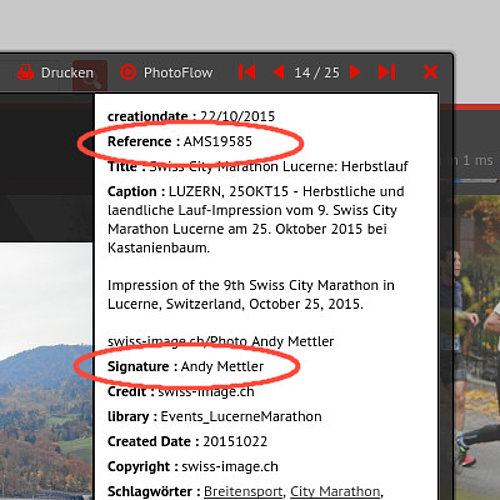
The standard for depicting all images is the mosaic form. Also available for selection are a mosaic view with smaller thumbnails and a list view with image legends. If the cursor moves over an index image, the image legend appears automatically. A very helpful tool. Double clicking on an index image will open the magnified image in preview mode, along with a detailed image legend. Image features may be browsed without the need to quit this convenient viewing mode. An additional thumbnail image will open as soon as the cursor moves over the smaller thumbnail.
A very efficient tool when searching for photos with similar content is the relative keyword search. Selecting the desired word from the keyword list of an image immediately shows all similar images labeled with the same keyword.
An image can be downloaded with just a few clicks
Downloading is much easier than it used to be. One click on the download icon or download button in preview mode brings up the option of a higher or lower-resolution image download. The only thing left to do is defining the storage location on your computer. The "batch downloads" function is also incredibly helpful. Images can be added to the lightbox with just one click. Once all desired images have been added there, several JPEG files can be downloaded in a single ZIP file.
"We are convinced that this represents a radical simplification of our image database for many of our users," says Andy Mettler, managing director of Swiss-Image GmbH. "For the media, finding images related to events and tourism in Switzerland and obtaining them free of charge will be even easier, thanks to a single password." Mettler also hopes that users from the tourism sector will benefit from the simplified search and download options, especially since bothersome cookies and other obstacles have been removed.

No laptop, no pocket PC - and yet images can still be transmitted from any Canon professional digital camera via FTP. A new, ultra-mobile and durable hotspot using a 3G modem complements the Canon EOS cameras with screw-on WLAN module, turning them into "live cameras." Pictures can be sent to the newsroom with a time lag ranging from mere seconds to minutes, where they can be processed for the Internet or for printing. You might say this is a high-end form of MMS, only with perfect picture quality and a JPEG size of up to 6 MB. A prerequisite for this most recent alternative in the area of ultra-mobile image transfer is the availability of the mobile communications data technologies UMTS, HSDPA or HSUPA.
We call this new workflow live image transmission (LIT). Wherever a telecom provider offers at least UMTS data transmission, image data may be sent quickly, easily and, as it were, "live" to the editorial office via FTP. A big plus for this image transfer alternative, which has been subject to testing under real conditions for some weeks now by swiss-image.ch, is the small size as well as the simplicity and reliability of the system. Once the basic configuration of the WLAN transmitter (Canon WFT-E2/E4) and the mobile 3.6G router has been set up, the system can be operated with the simple touch of a button. An advantage that the many photographers who don't want to mess with WLAN and 3G technology will appreciate.
Will we soon be seeing live image transmission straight from the DSLR camera?
Live image transmission using an external mini 3G hotspot may well be the last step leading up to the integration of a UMTS modem into professional digital cameras or attachable WLAN modules (called wireless file transmitters by Canon). This is a logical step, as in addition to WLAN, data transfer using the mobile 3G network or its faster successor, 3.6G, is prevalent in most Western countries and is used for cell phones, laptop computers, PC cards or USB sticks.
The technical fundamentals are therefore already in place to equip Canon's WFT devices with 3.6G technology as well as WLAN. In theory, there is absolutely no reason why image data cannot be sent via FTP directly from the camera from almost anywhere, allowing complete freedom of movement. Unfortunately, however, when it comes to new workflows for press and news photographers and the use of modern forms of communication, Japanese camera manufacturers seem to adopt a rather conservative stance.
That's why there seems to be little ground for optimism that high-end digital cameras and WFT-devices will soon be equipped with more ambitious solutions such as Idruna Inc.'s Idrune Remote Editing System (IRES), which is capable of active and passive data transmission. Indeed, a first step would be the integration of 3G/3.6G into the wireless file transmitters. Who knows, perhaps the forthcoming announcement about the release of the Canon EOS-1D Mk-IV will get things moving. Rumor from the USA has it that Nikon is also working on a new device for data transmission.

That's reality today: Transmitting web images in less then one minute, magazine quality images in two to five minutes.
Depending on the transfer rate, number of pixels and JPG compression of the digital photo, live image transmission takes from several seconds (web images) to a couple of minutes (5660 pixels). Live image transmission is by no means just a workflow for images in web size. Practically all images transferred from swiss-image.ch are print quality - that is, between 3600 and 5600 pixels.
In comparison to the fastest workflows using IRES/Pocket Phojo, live image transmission appears to be slower. However, considering the facts that the images can be sent immediately after being taken and that the system is very easy to use, the time lag becomes irrelevant.
Live image transmission gives every photographer the tool to beat his competitors to the punch. The simplicity and security of the configuration also bring significant advantages in stressful shooting situations. For weeks, we have been conducting intensive tests of the new configuration during difficult events such as the Swiss Alpine Marathon at Davos in a high alpine terrain, as well as during hours of ceaseless movement on a motorcycle, helicopter, and on foot. Live image transmission was still working without a glitch after hours of covering a complex tourism event in Lucerne with nearly a dozen changes of location. No previous system has been this resistant to disruption, high demand or operator error. No previous system has ever kept going for 13 hours using just its internal battery and one single replacement. The FTP data transfer crashed only once - during an elevator ride... We are convinced that the most recent configuration of live image transmission (total cost around CHF 1500.00 including Canon WFT-E2/E4) will be the last before the breakthrough of 3.6G data transmission, in tandem with WiFi, into the professional camera market. We would really like to see Canon become the first manufacturer to introduce such a product - may we suggest the WFT-E6 - to the market. Live image transmission would be a great relief for all those agency and press photographers under stress from the time pressure caused by Internet portals, competition and deadlines. Plus, it would be a great new opportunity for unemployed image editors.

One thing is for certain: In spite of years of ignorance, swiss-image.ch will continue to place great emphasis on remote picture editing and live image transmission and support further development in these areas. We are even prepared to divulge competitive advantages. Because we are convinced that, at the end of the day, these active and passive workflows for fast image data transmission simply can't be ignored. The technologies we have been talking about should be open to everyone. One more thing: The reason why you don't read a lot about remote picture editing is not so much that these technologies are not being used. Rather, it is attributable to some agencies' fears of divulging information to their competitors. We will continue to publish our results and tests.

June 23, 2009
swiss-image.ch will be launching a campaign promoting its own services in the coming days. A colorful set of postcards with a unique picture frame, which also functions as envelope, will inform customers about the various offers found at swiss-image.ch in relation to the range of photo services currently offered by the Swiss Image Agency for Tourism and Events.
"Over the years, our image service has become more and more complex. If we want the media and event organizers, their partners and guests to have immediate Internet access to high-quality images, we need innovative technology," Andy Mettler, founder of Swiss-Image, explained. Understanding that image work is central to event communication is also key to the swiss-image.ch concept, he said. This needs to be communicated to the organizers in an appropriate way, the photographer explained. "Many of our customers only realize much later how good images for the Internet, advertising and communication can add value to their businesses. And how much they can save with swiss-image.ch."
No boring PR image, just strong visual communication
With its MEDIAevent photo service, swiss-image.ch aims to meet all image needs surrounding a particular event. The goal is to produce not just striking press photos but also good advertising images of high quality, and to distribute them immediately. swiss-image.ch clearly distances itself from the crude PR cliché. Meaningful pictures are of great importance for effective advertising and for boosting an event's image. That's why our core customers appreciate our generous selection of images and the high picture quality (4096 to 5120 pixels). The emotional power of the image should never be underestimated. Andy Mettler: "Our event slideshows get hundreds of thousands of hits on the Internet. We get a lot of positive feedback."
Campaign focuses on event organizers
The information campaign is directed primarily at event organizers; it is also intended for tourist organizations. Each card showing one of Andy Mettler's event pictures presents a special offer for image work at events. Short and sweet. Taken together, the cards provide a comprehensive overview over swiss-image.ch. Of course, they also provide insight into Mettler's visual conception. The set of cards is mailed in a cardboard envelope, which can quickly and easily be transformed into a picture frame. Of course, the cards with their Swiss event images can also be sent as postcards.
The campaign is to be accompanied by e-mailings and coverage on the swiss-image.ch website. The card sets can also be ordered here free of charge (please don't forget your mailing address).
New super-access to images expected soon for Swiss media
Another campaign has as its target group the accredited editorial offices of the Swiss media. The relaunch of the new image database brings with it a super password for their exclusive use. It grants access to all tourist, event and WEF images on swiss-image.ch.
An eye-catching postcard tells editors how to gain swift access to all Swiss-Image photos, which, as is well known, are free of charge for press use. In light of the concentration and monopolization of the Swiss image market, many editorial offices are likely to welcome the free image offer from swiss-image.ch. We hope that the postcard with the password will soon adorn many computer monitors...
· All postcards as PDFfileadmin/daten/newsbilder/Postkarte.pdf
· Order all postcardset free of chargeKontakt


February 05, 2009
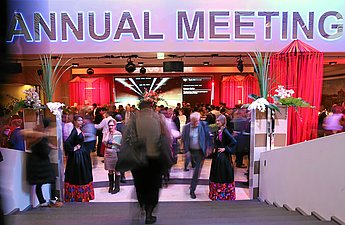
The photographers from swiss-image.ch took a great deal of pleasure in their work at this year's annual meeting of the World Economic Forum in the end of January 2009. Some of the experienced press photographers had the opportunity to work with the wireless workflow "Remote Picture Editing" for the first time ever. Their Canon EOS-1Ds Mk-III or Canon EOS 5D Mk-II professional cameras were all equipped with Wi-Fi adapters. Thanks to around 270 hot spots in the Davos Convention Center, their cameras were constantly connected with the FTP and IRES remote servers of swiss-image.ch. Immediately after shooting a photograph, each photographer was able to check out the result on the camera display and release the photograph. Shortly afterwards, the externally located photographic editorial team of four were able to see the photograph on their computer screens. The photograph was edited, captions were added and the press image was ready to go online. So photographs were available to the media and our colleagues at the WEF a mere 5 minutes after the shot. Photographers had the chance to focus their attention on other matters and therefore work more efficiently at this difficult, large event.
swiss-image.ch already extensively used Remote Picture Editing with the Idruna Remote Picture Editing (IRES) software last year. The advantages of this new method of operation in news photography are obvious: the photographer can concentrate solely on taking photos. He can stick to his "subject", not miss a thing and his picture data is still immediately available via WLAN or WWAN (3G HSDPA). Similar to the analog age prior to 1998, editing is now once again entirely done by the picture editor. At first sight, this division of labor may seem more technically complex and more expensive. However, the incredible speed advantage of Remote Picture Editing increases the competitiveness even of smaller photo agencies. And there is one more advantage: By using software such as IRES, it doesn't really matter any more where exactly the editor is located. Internet creates a bridge between the photographer, picture editor and media customer.
December 23, 2008
2009 will be a dynamic year for swiss-image.ch. A new webside will be launched next February including an improved design, more images and more services. The new site will lead the users faster to their photo zones. Only media have free-of-charge access to the the two major bases - the TOURISMindex and the EVENTphotoservice. Visitors to the site will get guest access and can ejoy a lot of slide shows and meet Switzerland in it's diversity.
The new photo base to power the search for the nicest tourism and event pictures of Switzerland will be launched later next spring. The new tool will be easier to use and offers support of many common languages.
Guest Login Imagedatabase >>
(Image download disabled)
Press Photo Service at no charge!
All photos are protected by copyrights. Only ediotrial use of our pictures in
public media products is free of charge. Log in means that you accept the
general conditions. Violations causes copyright fees.